

When planning a new deck, most homeowners naturally focus on what they can see — the decking boards, colours, and finishes. However, the long-term performance of any deck depends just as much on what sits underneath.
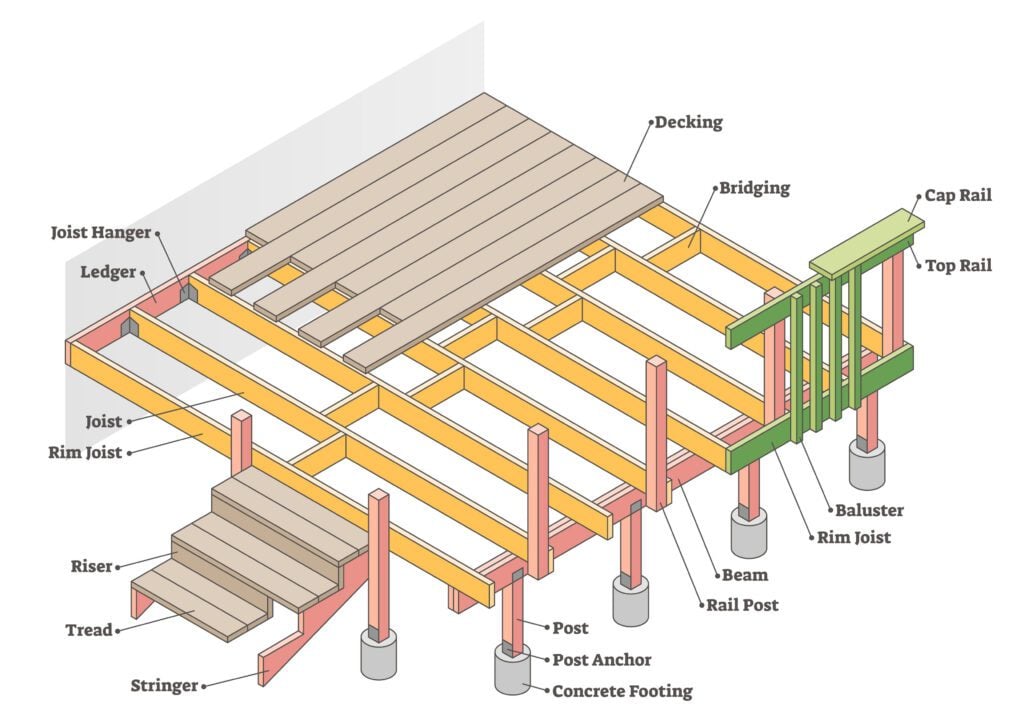
Decking joists form the structural framework of your deck. Choosing the right joist material is essential for strength, safety, moisture resistance, and long-term durability — especially in Australian conditions. This guide explains how homeowners can make a confident, informed decision.

Why the Right Decking Joist Matters
Decking joists support the entire deck structure. The quality and suitability of the joists directly affect:
-
Load-bearing strength and safety
-
Deck stability and comfort underfoot
-
Resistance to moisture and environmental exposure
-
Overall lifespan of the deck
In practice, many decking problems — including movement, sagging boards, or moisture damage — can be traced back to poor joist selection rather than the decking boards themselves.
At PureSolid, we frequently see decks where surface materials perform well, but the substructure deteriorates prematurely due to unsuitable joists. For homeowners, this often results in avoidable repair costs later on.
Australian Conditions: What Homeowners Should Consider
Australia’s climate places unique demands on deck substructures. Before selecting joists, homeowners should consider:
-
UV exposure, which accelerates material fatigue
-
Rainfall and humidity, increasing moisture risk
-
Coastal environments, where salt corrosion is common
-
Bushfire-prone areas, which may require fire-resistant materials
Local council requirements and building codes may also influence joist selection, particularly for elevated decks and balconies. A joist system that performs well overseas may not always be suitable for Australian conditions.
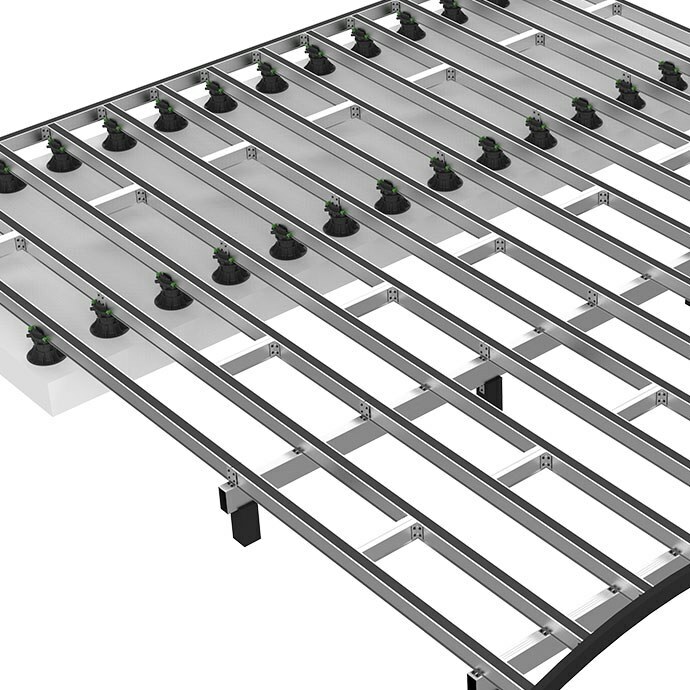
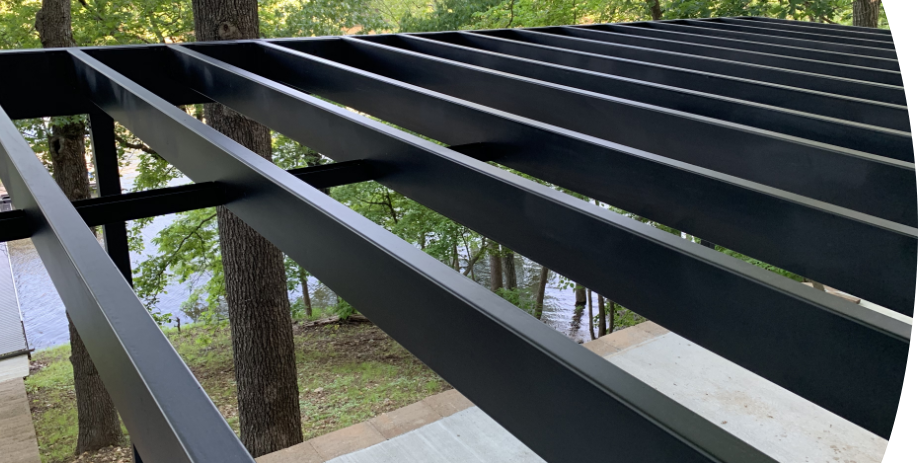
Aluminium Decking Joists: Strength and Long-Term Stability
Aluminium joists are increasingly chosen by homeowners who prioritise long-term performance and minimal maintenance.
Key Benefits
-
High structural strength and rigidity
-
Resistant to moisture, rot, and termites
-
Dimensionally stable — no warping or twisting
-
Long service life with minimal ongoing maintenance
Best Applications
-
Elevated decks and balconies
-
Areas with limited drainage or high moisture exposure
-
Homeowners seeking a long-term, low-maintenance solution
While aluminium joists typically involve a higher upfront cost, many homeowners find they offer better value over time by reducing maintenance and structural issues. For composite decking systems designed to last, aluminium joists are often selected as part of a complete, integrated structure rather than as a standalone upgrade.
Recycled Plastic Joists: Moisture-Resistant and Sustainable
Recycled plastic joists provide an alternative to traditional timber, offering improved moisture resistance with moderate structural strength.
Advantages
-
Resistant to rot and moisture absorption
-
Manufactured from recycled materials
-
Consistent dimensions compared to timber
Limitations
-
Lower load-bearing capacity than aluminium
-
Can flex under heavier loads
-
Not always suitable for elevated decks
Best Applications
-
Ground-level residential decks
-
Light-duty structures
-
Areas where moisture resistance is a priority but loads are modest
Plastic joists can be a practical option for certain projects, provided they are used within their structural limitations.
Timber Joists: Traditional but Maintenance-Dependent
Treated timber joists remain common in residential decking due to familiarity and lower initial cost.
Advantages
-
Widely available
-
Easy to work with
-
Lower upfront material cost
Important Considerations
-
Susceptible to moisture, rot, and insect damage over time
-
Can warp, twist, or crack as it ages
-
Requires regular inspection and maintenance
Best Applications
-
Covered decks with good ventilation
-
Short-term or budget-driven projects
For homeowners seeking a deck with minimal upkeep and a long service life, timber joists often represent a compromise rather than a permanent solution.
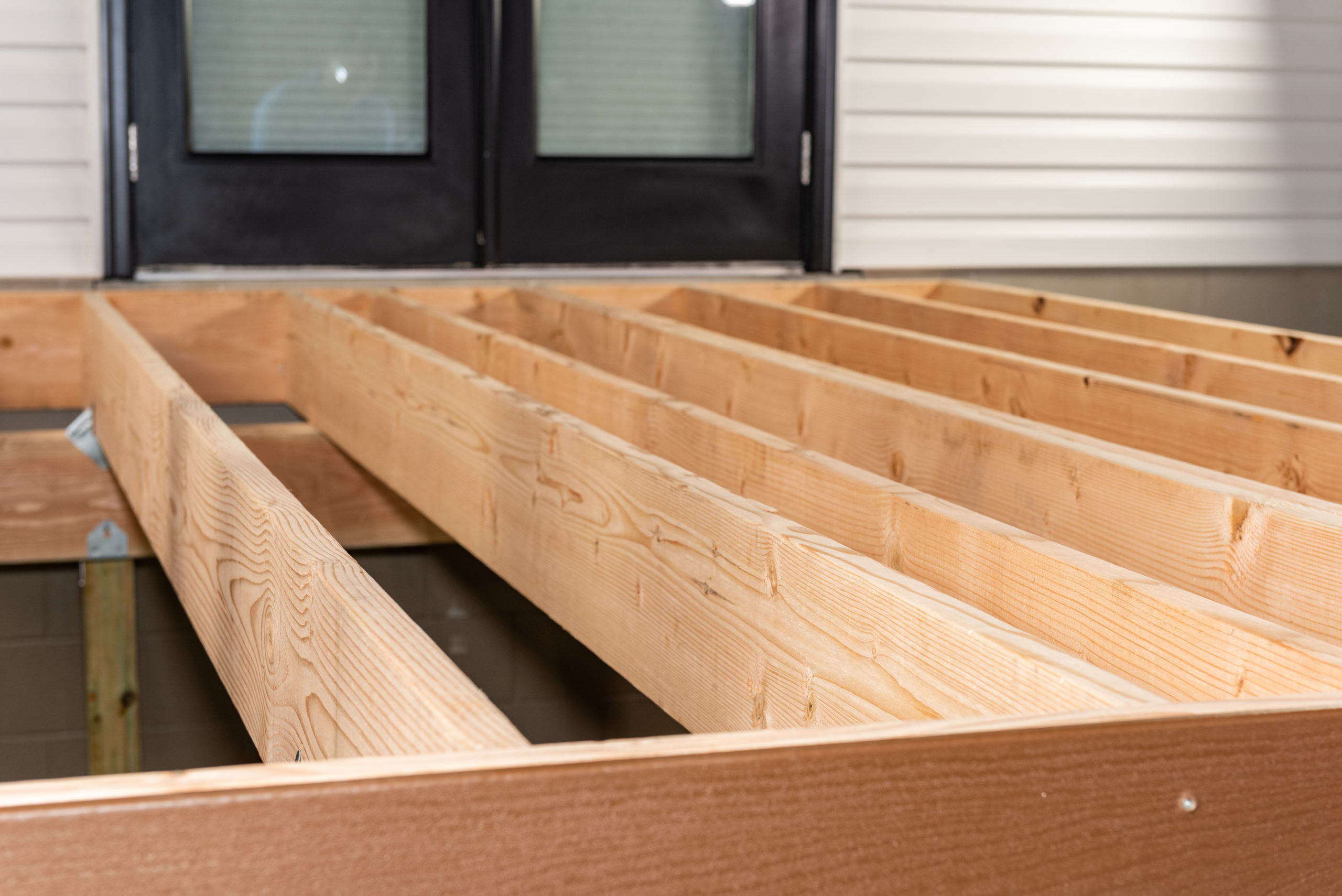
Joist Spacing: A Small Detail with Big Impact
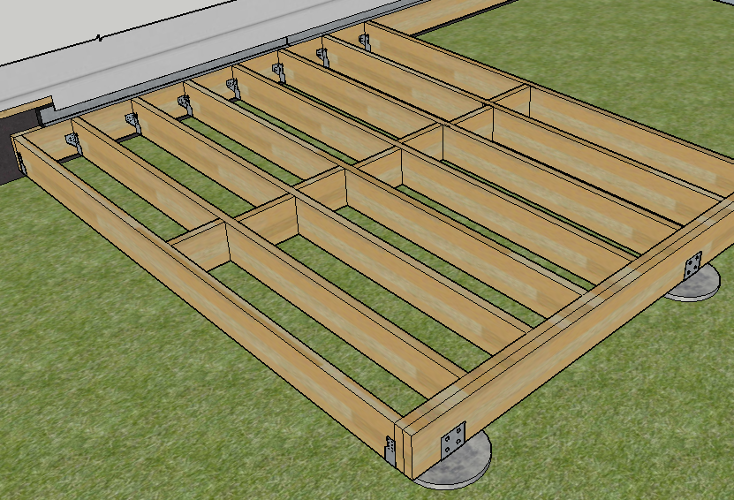
Correct joist spacing is critical to deck performance and comfort.
Key points for homeowners:
-
Composite decking typically requires closer joist spacing than timber boards
-
Proper spacing reduces board flex and improves stability
-
Manufacturer guidelines should always be followed
Incorrect spacing is one of the most common causes of:
-
Bouncy or unstable decks
-
Premature board movement
-
Installation and warranty issues
A well-designed joist layout supports both the appearance and longevity of the deck.
A Practical Joist Selection Checklist
| Joist Type | Structural Strength | Moisture Resistance | Maintenance Level | Typical Lifespan | Best Suited For Homeowners Who… |
|---|---|---|---|---|---|
| Aluminium Joists | ★★★★★ Very High | ★★★★★ Excellent | ★☆☆☆☆ Very Low | 25+ years | Want a long-lasting, low-maintenance deck and are building elevated decks, balconies, or premium outdoor spaces |
| Recycled Plastic Joists | ★★★☆☆ Moderate | ★★★★☆ High | ★★☆☆☆ Low | 20+ years | Are building ground-level decks and prioritise moisture resistance and sustainability |
| Treated Timber Joists | ★★☆☆☆ Low–Moderate | ★★☆☆☆ Moderate | ★★★★☆ High | 10–15 years | Have a tight budget or are building a covered deck with good airflow |
Before finalising your decking project, consider the following:
-
Is the deck ground-level or elevated?
-
Will it be exposed to rain, moisture, or coastal air?
-
How long do you expect the deck to last?
-
How much maintenance are you willing to manage over time?
-
Are there council or building code requirements to meet?
Answering these questions early helps homeowners choose a joist system that aligns with their expectations and environment.
Frequently Asked Questions
What is the best joist material for composite decking?
Aluminium joists generally offer the highest structural stability and the longest lifespan for composite decking systems.
Can different joist materials be mixed?
Mixing joist materials is generally discouraged due to differing expansion rates and long-term performance characteristics.
Do aluminium joists rust?
Quality aluminium joists do not rust and perform well in coastal and high-moisture environments.
How long should decking joists last?
Depending on material and conditions, joist lifespans can range from around 10 years for lower-grade timber to several decades for aluminium systems.
Final Thoughts: Build Once, Enjoy for Years
For homeowners, a deck should enhance daily living — not become a future repair project. While joists are hidden from view, they determine how the entire structure performs over time.
A well-designed deck works best when boards, fixings, and joists are considered as a complete system rather than selected in isolation. Making the right joist choice from the outset ensures better performance, lower maintenance, and lasting peace of mind.